
WELCOME PACK BONUS
OF 400% UP TO €3200
+ 200 FREE SPINS
OF 400% UP TO €3200
+ 200 FREE SPINS
Home → Blackjack
Blackjack at National Casino: Variants, Rules and Payouts
Bonus 100 EUR with 10 percent credit
The casino offers a 300% welcome bonus up to €2,000 plus 100 free spins for new players registering an account. This generous package provides substantial bankroll expansion compared to standard industry offers that often cap at lower percentages. Players must evaluate the total potential value against the specific wagering requirements attached to each component of the reward structure.
Tischspiele contribute only 10% toward the bonus wagering requirement, while Slots contribute 100%, creating a significant disparity in playthrough efficiency. A €100 deposit yields a €300 bonus; meeting the 40x turnover requires €16,000 in slot bets versus €160,000 in table games. This mathematical reality forces players to choose high-variance slots or accept a much longer path to withdrawable funds using blackjack.
The house edge on Blackjack 6 Decks stands at 0.46%, meaning every €100 wagered statistically returns €99.54 over the long term. When combined with the 10% contribution rate, the effective cost of clearing the bonus through table games increases by a factor of ten. Strategic play becomes essential to minimize losses during the mandatory wagering period, as the low RTP amplifies the impact of the contribution penalty.
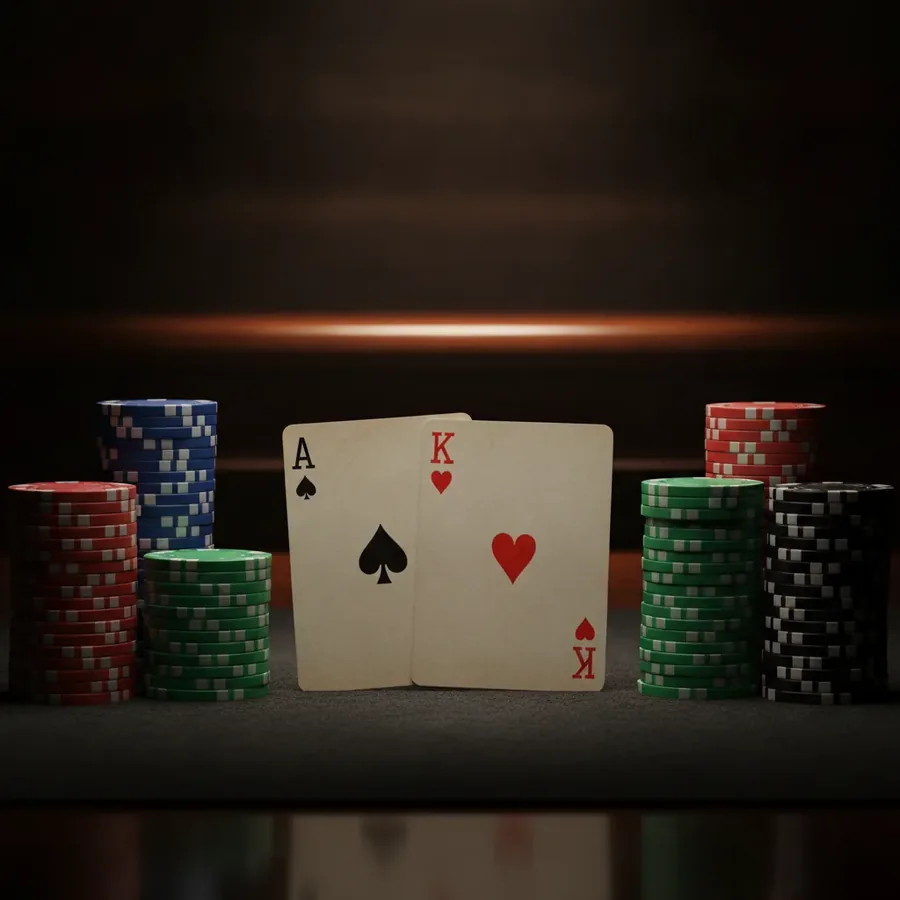
Highroller from 500 EUR per hand
Quantum Blackjack Plus Live allows wagers ranging from 1 EUR to 5,000 EUR per hand, accommodating high-stakes players seeking maximum volatility. Playtech powers this table, integrating Quantum Multipliers that can hit up to 1,000x on specific three-card combinations totaling 21 points. These multipliers drastically alter the risk profile, offering potential payouts far exceeding standard even-money wins on the main bet.
Lightning Blackjack by Evolution supports unlimited concurrent players with betting limits between 1 and 2,500 EUR per round. Lightning Multipliers apply to winning hands, offering payouts up to 25x the original stake when triggered during the deal phase. The game maintains an RTP of 99.56% when optimal strategy is employed, ensuring fair theoretical returns despite the random multiplier events.
Blackjack Party hosted by Evolution features a minimum bet of 1.000 EUR and a maximum of 1,000 EUR, creating a unique inverted limit structure. Two moderators drive the party atmosphere, influencing the pacing and energy of the game session for those willing to commit large sums. This specific configuration targets a niche segment of players who prioritize entertainment value alongside high-limit action within the live dealer environment.
Standard Blackjack 6 Decks rules include Dealer Stands on Soft 17 (S17) and Double After Split (DAS), which reduce the house edge to 0.46%. Highrollers benefit from these liberal rules as they preserve their bankroll during extended sessions involving multiple splits and doubles per hand. The combination of favorable mechanics and high limits creates an optimal environment for advanced strategic execution and bankroll management.
Which hands are excluded from Surrender?
Late Surrender is available in the Liberal Vegas Strip variant, allowing players to forfeit half their bet after the dealer checks for blackjack. This rule improves the Return to Player (RTP) by approximately 0.08 percentage points compared to games without any surrender option. It applies only after the dealer has verified they do not hold a natural twenty-one, protecting players from immediate loss on weak hands.
The Insurance side bet pays 2:1 but carries a severe house edge of 7.47%, making it strictly prohibited in optimal basic strategy scenarios. While not a surrender mechanic, players might confuse insurance decisions with surrender options when facing a dealer Ace. Basic strategy dictates always rejecting insurance unless card counting reveals a True Count of +3 or higher, a condition rarely met in standard play.
Blackjack Insurance / Versicherung utilizes 6 to 8 decks and allows bets up to 50% of the original main wager amount. This side bet is entirely separate from the primary hand outcome and does not offer any surrender-like protection for the main stake. The RTP of 92.53% indicates a significant long-term loss, reinforcing why professional analysts advise against taking insurance under normal circumstances.
Early Surrender, which allows forfeiture before the dealer checks for blackjack, is extremely rare and can improve RTP by up to 0.6 percentage points. Since this option is largely unavailable, players must rely on Late Surrender where possible to mitigate losses on hands like 15 against a dealer 10. The absence of early surrender shifts the burden of risk management entirely onto the player's decision-making accuracy.
What Hole Card Means at a Live Table
Live dealer tables operate under continuous shuffle or manual dealing protocols where the hole card is revealed only after all player actions are complete. In European style games, the dealer receives one face-up card and one face-down card, delaying the outcome until the player decides to hit or stand. This mechanism prevents players from knowing if the dealer has a blackjack until it is too late to surrender or split effectively.
Evolution's Lightning Blackjack and Quantum Blackjack Plus use digital overlays and rapid dealing sequences that obscure traditional hole card timing. Players see the dealer's upcard clearly, but the second card remains hidden until the betting phase concludes and actions are finalized. This design ensures fairness by preventing real-time calculation of dealer probabilities based on visible cards alone during the active betting window.
Basic strategy for Blackjack 6 Decks assumes the hole card is unknown and relies on statistical averages over millions of simulated hands. The 0.46% house edge is calculated based on the probability distribution of the hidden card relative to the dealer's upcard. Understanding this limitation helps players accept that perfect information is never available, requiring adherence to mathematically proven decision trees rather than intuition.
The concept of hole card play directly impacts the viability of strategies like card counting, which require tracking the ratio of high to low cards remaining. In live environments, frequent shuffling reduces the effectiveness of such systems by resetting the deck composition more often than in shoe games. Players relying on advanced techniques must adapt to the accelerated pace and limited penetration typical of modern live dealer streams.
One Deck vs Eight Decks in House Edge
Blackjack Ein Deck offers a superior house edge of 0.15% compared to 0.46% for six-deck games, assuming identical liberal rules like S17 and DAS. Fewer decks reduce the probability of drawing unfavorable cards, significantly lowering the casino's statistical advantage over the player's long-term bankroll. This improvement translates to roughly 0.48 percentage points better odds per hand compared to eight-deck variants.
However, single-deck games often compensate for their lower house edge by reducing the blackjack payout from 3:2 to 6:5. This rule change adds exactly 1.39 percentage points to the house advantage, negating the benefit of having fewer cards in the shoe. A €10 blackjack pays €12 instead of €15, resulting in a net increase in expected loss despite the improved deck composition.
Blackjack 3 Decks, S17, DAS, DOA with 3:2 payout delivers an RTP of 99.54% and a house edge of 0.46%. This mid-range option balances the accessibility of multi-deck shoes with slightly better odds than standard eight-deck games. Players should verify the specific number of decks used, as moving from one deck to six decks can shift the edge by nearly 0.3 percentage points depending on other rules.
The difference between one deck and eight decks is most pronounced in situations involving splitting pairs and doubling down, where card removal effects are stronger. With fewer cards, the likelihood of receiving a ten-value card after splitting Aces or eights increases marginally. Savvy players seeking the absolute best odds will prioritize single-deck games with 3:2 payouts, avoiding those that revert to inferior payment structures.
Blackjack variants at a glance
| Variant | Payout | House edge | Rule | Bet range |
|---|---|---|---|---|
| Blackjack Surrender (Late Surrender) – Regel-Effekt | n.a. (Regel-Modifikator) | −0.08 Prozentpunkte | Spieler gibt Hand nach Dealer-Blackjack-Prüfung auf, verliert die Hälfte des Einsatzes. Verbessert RTP um ca. 0.08 Prozentpunkte. Early Surrender ist wesentlich wertvoller (bis −0.6 Prozentpunkte), aber extrem selten. | Rückzahlung 50% des Einsatzes |
| Blackjack Liberal Vegas Strip (liberale Regeln, 3:2) | 99.72% | 0.28% | Günstigste Regelkombination: S17 + DAS + Resplit + Late Surrender. Standardabweichung 1,15 | Blackjack 3:2, Gewinn 1:1 |
| Blackjack 6 Decks, S17, DAS, DOA, Auszahlung 3:2, Basisstrategie | 99.54% | 0.46% | Dealer steht auf Soft 17; Verdopplung auf jeder Zweierkarte; Verdopplung nach Split erlaubt; keine Aufgabe. Basisstrategie ist für diesen Wert zwingend | Blackjack 3:2, normaler Gewinn 1:1, Insurance 2:1 |
| Blackjack Auszahlung 6:5 statt 3:2 (6 Decks) | 98.15% | 1.85% | Ersatz von 3:2 durch 6:5 fügt exakt +1.39 Prozentpunkte zum Vorteil des Casinos hinzu – stärker als jede andere Regeländerung. Bei $10 Einsatz zahlt Blackjack $12 statt $15. | Blackjack 6:5, Gewinn 1:1 |
| Blackjack Insurance / Versicherung (6–8 Decks) | 92.53% | 7.47% | Separate Nebenwette bis 50% der Hauptwette, wenn der Dealer ein Ass hat. Basisstrategie schreibt IMMER Ablehnung vor (außer Karten zählen bei True Count ≥ +3). Bei einem Deck Vorteil ≈ 5.88% | Insurance 2:1 |
| Blackjack Split / Double / H17 – Regel-Effekte | n.a. (Regel-Modifikatoren) | H17 +0.22 Prozentpunkte; RSA −0.08 Prozentpunkte; DAS −0.14 Prozentpunkte | Dealer Hits Soft 17 verschlechtert RTP um 0.22 Prozentpunkte; Resplit Aces verbessert um 0.08 Prozentpunkte; Double After Split verbessert um ca. 0.14 Prozentpunkte; 6 Decks statt 8 – ca. 0.02 Prozentpunkte. | Double – Einsatz ×2 mit einer Karte; Split – bis 4 Hände; Ass-Split meist mit einer Karte. |
Surrender vs Playing Out on 16 vs 10
Late Surrender allows players to forfeit their hand after the dealer checks for blackjack, resulting in a loss of exactly fifty percent of the original stake. This rule modification improves the overall Return to Player by approximately 0.08 percentage points compared to standard play without this option. The strategic value becomes critical when holding a hard sixteen against a dealer ten.
Early Surrender offers a significantly higher benefit, potentially reducing the house edge by up to 0.6 percentage points because it applies before the dealer inspects for an ace. However, this specific variant is extremely rare in modern online casino environments and is rarely found in standard software implementations. Most tables restrict the surrender option to the late phase only.
Playing out a hard sixteen against a ten forces the player to risk the entire wager on a statistically unfavorable draw where busting is highly probable. Choosing surrender preserves half the bankroll, which is mathematically superior to the expected loss from hitting or standing in this specific scenario. This decision directly impacts long-term retention rates.
Clicked Too Late: Hand Is Automatically Held
Quantum Blackjack Plus Live features Quantum Multipliers that can reach up to one thousand times the bet on three-card combinations totaling twenty-one points. Playtech developed this live table with betting limits ranging from one euro to five thousand euros for high-stakes participants. The multipliers apply to winning hands regardless of whether the player follows basic strategy perfectly.
Lightning Blackjack by Evolution introduces Lightning Multipliers up to twenty-five times on any winning hand, adding excitement to the standard gameplay loop. The table supports an unlimited number of simultaneous players with bets between one and two thousand five hundred euros. This RTP stands at 99.56 percent when optimal strategy is applied consistently.
Blackjack Party hosted by Evolution creates a party atmosphere with two moderators while accepting bets from one to one thousand euros. The game maintains standard payout structures but focuses on entertainment rather than complex multiplier mechanics. Players must act quickly as the dealer moves through the shoe efficiently.
Six Card Charlie Pays Immediately with Six Cards
Standard Blackjack Auszahlung pays six to five instead of the traditional three to two for a natural blackjack using six decks. This rule change adds exactly 1.39 percentage points to the house advantage, making it more detrimental than any other single rule variation. A ten-euro bet yields twelve euros profit instead of the fifteen euros offered by fairer games.
The base game uses six decks with a dealer standing on soft seventeen and allowing doubling after splitting. These conditions result in a house edge of 1.85 percent with an RTP of 98.15 percent. The reduced payout for blackjacks heavily offsets the benefits of these favorable side rules.
Blackjack Insurance serves as a separate side bet paying two to one if the dealer holds an ace showing. This bet carries a massive house edge of 7.47 percent with an RTP of only 92.53 percent. Basic strategy dictates always rejecting this wager unless counting cards indicates a true count greater than or equal to plus three.
How many decks are in the shoe?
Using fewer decks generally lowers the house advantage because card removal effects become more pronounced during the shoe. A single deck game with classic rules and three-to-two payouts achieves an impressive RTP of 99.85 percent. This represents a house edge of just 0.15 percent for skilled players.
However, casinos often compensate for the lower deck count by switching to the unfavorable six-to-five blackjack payout structure. This combination neutralizes the mathematical benefit of playing with only one deck of cards. Players should verify the payout ratio before sitting down at any table.
Liberal Vegas Strip rules offer the most favorable conditions by combining three-to-two payouts with soft seventeen standing. This configuration yields an RTP of 99.72 percent and a house edge of only 0.28 percent. The standard deviation for this game is 1.15, indicating moderate volatility levels.
Six Decks to Eight Decks in the Shoe
Increasing the number of decks from six to eight slightly increases the house edge by approximately 0.02 percentage points. This marginal difference arises because card tracking becomes less effective with a larger penetration depth. The impact is negligible compared to payout variations.
Dealer hitting on soft seventeen adds 0.22 percentage points to the house edge, significantly worsening the player's expectation. Conversely, allowing resplitting aces improves the RTP by 0.08 percentage points. Doubling after split further enhances odds by about 0.14 percentage points.
Table games contribute only ten percent toward the bonus wagering requirement for the 300% welcome bonus up to two thousand euros. Slots contribute one hundred percent, making them the preferred choice for clearing bonus funds quickly. Players must adhere to this contribution rate when managing their bankroll effectively.
Mobile version needs 1 Mbit bandwidth
The mobile interface of the online casino requires a stable connection with at least 1 Mbit bandwidth to function correctly during gameplay. This technical threshold ensures that live dealer streams and real-time card deals do not suffer from latency or disconnection issues on smaller screens. Players using slower connections may experience interruptions, so verifying network stability before starting a session is essential for a smooth experience.
High-definition graphics and continuous data synchronization consume significant bandwidth, making the 1 Mbit minimum a strict requirement rather than a suggestion. Without this speed, the visual fidelity of tables like Blackjack Party or Quantum Blackjack Plus degrades, potentially affecting the user's ability to track game events accurately. The platform prioritizes performance over visual excess to maintain responsiveness under these constraints.
Stand-on-17 Rule and Its Meaning for Players
The Stand-on-17 (S17) rule mandates that the dealer must stand on all hands totaling 17 points, including Soft 17 combinations. This rule contributes to a lower house edge compared to tables where the dealer hits on Soft 17, which increases the house advantage by 0.22 percentage points. For instance, the Blackjack Liberal Vegas Strip variant utilizes S17 alongside other favorable rules to achieve a low house edge of 0.28 percent.
In contrast, a Hit-on-Soft-17 (H17) rule significantly worsens the player's odds by adding 0.22 percentage points to the house edge. When comparing variants, the standard Blackjack 6 Decks game often employs S17 to maintain its competitive RTP of 99.54 percent. Understanding this distinction helps players identify tables that offer better long-term returns by avoiding H17 configurations.
Double Down after Split: which tables allow it
The Double Down after Split (DAS) rule permits players to double their bet on hands created by splitting pairs, providing a strategic advantage. This specific rule improvement reduces the house edge by approximately 0.14 percentage points, enhancing the overall value for the player. It is a key component in liberal rule sets found in games like the Blackjack Liberal Vegas Strip variant.
Tables that prohibit DAS force players to keep their split hands at the original bet size, missing opportunities to maximize profits on strong cards. While some variants restrict doubling to only the first two cards, allowing DAS expands strategic flexibility across all split hands. This feature is often paired with Resplit Aces to further optimize the theoretical return rate for skilled participants.
How much time is left for the decision?
Live dealer blackjack tables impose strict time limits for player decisions, typically ranging between 10 to 30 seconds per action. These constraints ensure the game flow remains efficient and matches the pace of a physical casino floor. Missing the timer results in an automatic decision, often defaulting to a hit or stand based on basic strategy settings if enabled.
The duration varies slightly depending on the specific provider and table setup, with Evolution and Playtech offering distinct pacing mechanisms. In fast-paced variants like Lightning Blackjack, quick reactions are crucial to capitalize on potential multipliers before they expire. Players should familiarize themselves with the countdown indicator to avoid costly errors due to hesitation.
Perfect Pairs vs 21+3 in House Edge
Side bets such as Perfect Pairs and 21+3 offer additional payout opportunities but carry significantly higher house edges compared to main game wagers. The house edge for insurance, another common side bet, stands at 7.47 percent, illustrating the steep cost of these optional bets. Players seeking to minimize losses should generally avoid these high-variance options unless employing advanced card counting strategies.
While main blackjack games can achieve house edges below 0.5 percent with optimal play, side bets often exceed 2 to 5 percent depending on the specific paytable. The RTP for insurance is particularly low at 92.53 percent, making it a mathematically unfavorable choice for most players. Strategic discipline dictates ignoring these bets unless specific count conditions justify the risk.
Contact
Live - online chat
Banking









Providers












national casino 2025